Education
The Level 7 Diploma in Aesthetic Medicine: What Healthcare Professionals Need to Know in 2026
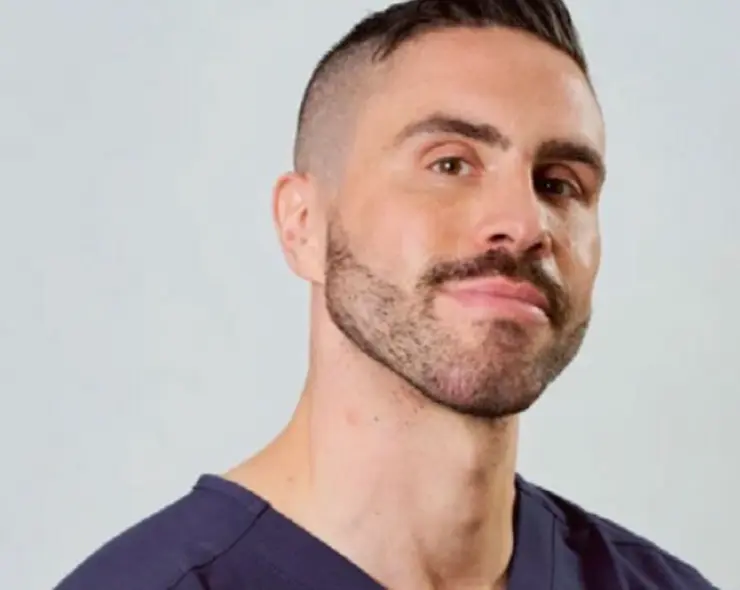
By Mr James Olding, FRCS (OMFS), Founding Director, Interface Aesthetics
Aesthetic Medicine in 2026: Growth, Opportunity and Responsibility
The non-surgical aesthetics market continues to grow steadily in the United Kingdom and internationally. Patient demand has expanded, injectable technologies have evolved, and aesthetic medicine is increasingly recognised as a legitimate and sophisticated field within healthcare rather than a peripheral industry.
Unsurprisingly, this growth has attracted more healthcare professionals. Doctors, dentists, nurses and allied healthcare practitioners are exploring aesthetic medicine as either a complementary career alongside NHS practice or, in some cases, as a full professional transition.
However, while opportunity is abundant, clarity is not.
Clinicians considering aesthetics in 2026 are confronted with complex questions:
- What qualification should I pursue?
- Is the Level 7 mandatory?
- How will regulation evolve?
- Which provider is credible?
- How do I protect my professional future?
These are not trivial considerations. Aesthetic medicine is patient facing, outcomes-driven and reputationally sensitive. It requires technical precision, anatomical understanding and defensibility in equal measure.
My perspective on this topic is shaped by nearly two decades of structured NHS training in Oral and Maxillofacial Surgery, alongside building one of the UK’s leading clinician-led aesthetic training academies, Interface Aesthetics. In both environments, I have clearly seen that robust, competency-based education is the foundation of safe practice and long-term professional credibility.
The Level 7 Diploma in Aesthetic Medicine sits at the centre of this conversation. But understanding its significance requires nuance.
Who Am I — And Why Does My Perspective Matter?
Before discussing the qualification itself, it is important to understand the standpoint from which I am writing.
I am currently completing the final stage of an 18-year structured training pathway in Oral and Maxillofacial Surgery within the NHS. My career has required dual qualification in Medicine and Dentistry, completion of Royal College examinations, and Fellowship of the Royal College of Surgeons in Oral and Maxillofacial Surgery (FRCS OMFS, Royal College of Surgeons of England). In effect, this represents board-certification level training in facial surgery.
Surgical training at this level is not simply about operating. It instils a mindset: progressive competency sign-off, evidence-based reasoning, structured mentorship, governance literacy and lifelong learning.
Alongside this surgical career, I founded Interface Aesthetics, to offer the best training in aesthetic medicine in the UK. We now operate with an 18-strong faculty of surgeons, doctors, dentists and nurses across the UK and internationally. We were honoured to receive Training Provider of the Year at the Aesthetics Awards in 2024, and I personally received both Rising Star (2023) and Medical Aesthetic Practitioner of the Year (2025).
I do not share this for self-promotion. I share it because my philosophy of aesthetic education is shaped by surgical training. Education must precede commercialisation. Governance must underpin growth. Competency must be demonstrable.
It is from that framework that I approach the Level 7 Diploma.
What Is the Level 7 Diploma in Aesthetic Medicine?
The Level 7 Diploma in Aesthetic Medicine is a postgraduate qualification regulated by Ofqual, the Office of Qualifications and Examinations Regulation for qualifications, examinations and assessments in England. It sits at Master’s degree level within the UK’s Regulated Qualifications Framework.
Its purpose is to demonstrate that a healthcare professional has achieved competency in core aesthetic treatments, including botulinum toxin, dermal fillers, consultation, complication management and clinical governance principles.
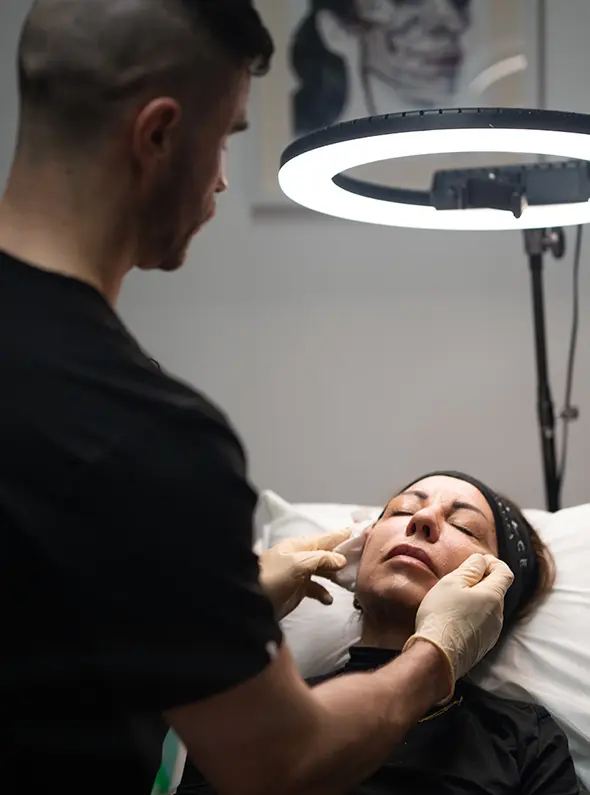
A properly delivered Level 7 programme is not a short course. It is structured and comprehensive. It should include formal theoretical assessment, objective structured clinical examinations (OSCEs), coursework elements and, critically, supervised clinical mentorship.
In our programme, delegates build a 40-patient portfolio under direct supervision. That mentorship component is not peripheral; it is central. It is where theory meets clinical judgement.
However, how this is delivered varies significantly between providers. This is where due diligence becomes essential.
The Role of the JCCP And Why It Is Increasingly Important
The Joint Council for Cosmetic Practitioners (JCCP), chaired by Professor David Sines, was established to improve safety, governance and standards in aesthetic practice. It accredits training providers against a defined national framework, reviewing educational quality, premises, faculty experience and governance systems.
At present, only a small number of independent training providers hold full JCCP approval for the Level 7 Diploma. Interface Aesthetics is one of them, alongside a limited group of others.
My strongest professional advice is simple: if you are undertaking a Level 7 Diploma in 2026, choose a JCCP-approved provider.
While England’s legislative programme is not yet fully enacted, Scotland has provided clearer direction. It is highly likely that future regulation will include defined educational standards as part of licensing frameworks. In my view, a JCCP-approved Level 7 represents the most robust and defensible pathway currently available.
This is not a marketing statement. Achieving JCCP approval required additional investment, scrutiny and governance on our part. I chose to pursue it because I believe external quality assurance is fundamental to future-proofing delegates.
Beyond the Qualification: Why Your Due Diligence Matters
A Level 7 Diploma is important in 2026. But not all Level 7 experiences are equal.
The real question is not simply “Should I take a Level 7?” but “Who is delivering it, and how?”
One of the most underestimated domains in aesthetic medicine is applied facial anatomy. Having trained in medicine, dentistry or nursing does not automatically confer expertise in injectable anatomy.
From my surgical background—having operated extensively on the face—I can say unequivocally that injectable anatomy is specialised and clinically nuanced. It demands three-dimensional understanding, vascular awareness and complication anticipation. It cannot be reduced to surface diagrams.
When evaluating a provider, you should examine the faculty carefully. Who leads the academy? What are their clinical credentials? Are they engaged in research? Do they have experience in governance and complication management?
Just as in medical school, you are not taught by one person. You are taught by a faculty. That faculty must be cohesive, collaborative and genuinely expert. Aesthetic medicine requires depth, not simply delivery.
Certification vs Competency: A Crucial Distinction
In structured NHS training, competency is never assumed. It is demonstrated progressively and signed off by credible supervisors.
There is a difference between certification and competency.
- Certification means you have completed an assessment.
- Competency means you have internalised understanding, demonstrated safe practice, and been signed off by someone with expertise and credibility.
In aesthetic medicine, this distinction is critical. Passing an exam is not the same as demonstrating safe injection practice over time.
When selecting a provider, ask yourself: who is signing off my competencies? Have they themselves demonstrated sustained expertise in practice?
Your training should mirror the principles of structured medical education: progressive, supervised, defensible.
Choosing an Educational Ecosystem, Not Just a Course
Another frequently overlooked factor is the broader educational environment.
You are not simply purchasing a diploma. You are entering a professional ecosystem.
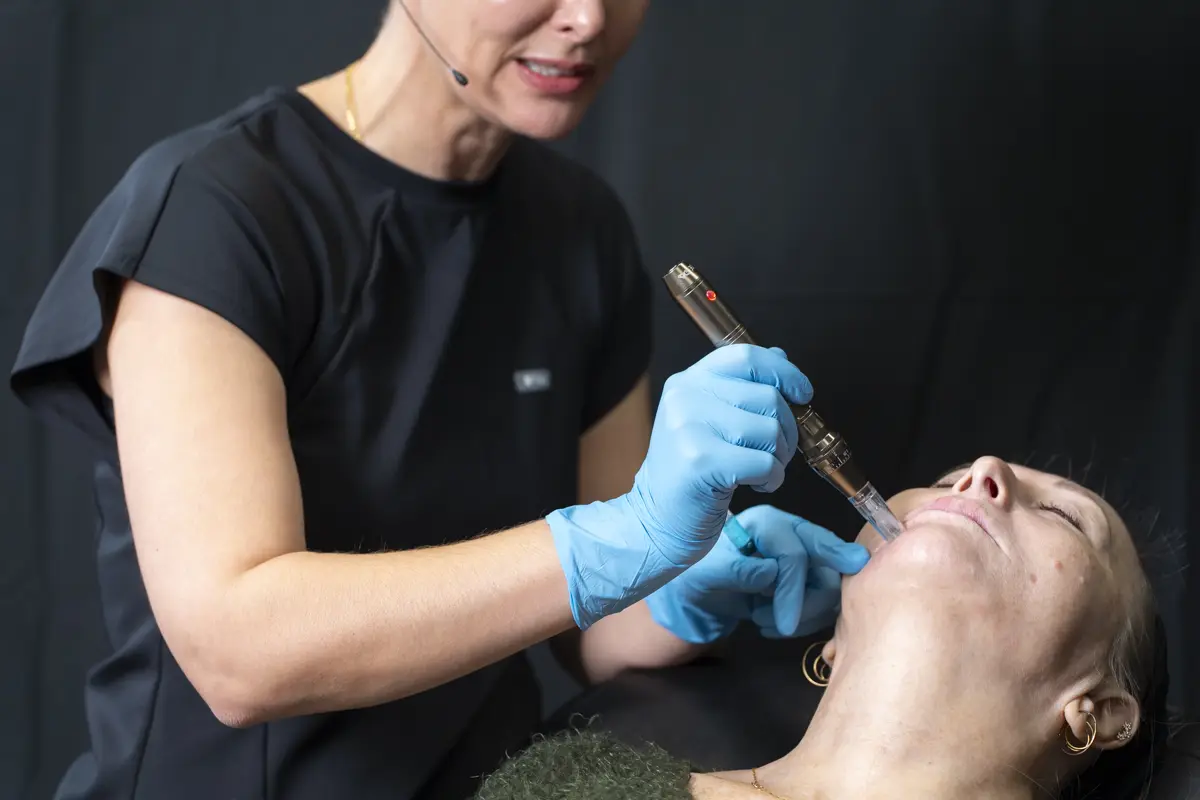
A high-quality academy should offer more than assessment. It should provide ongoing mentorship, research engagement opportunities, faculty progression pathways and industry integration.
When I founded Interface Aesthetics, I wanted to create a lifecycle of development. Our JTMS programme supports clinicians at entry level. Our Epiphany programme supports advanced delegates. Faculty members such as Jordan Faulkner and Nabil Jethi progressed through structured mentorship into leadership roles. Interface Expo, now one of the largest single-stream aesthetic congresses in the UK, provides annual re-engagement and continued professional growth.
Aesthetic medicine should not feel isolated from professional standards. It should feel structured and progressive.
Is the Level 7 Mandatory?
Legally, at the time of writing (February 2026), the Level 7 Diploma is not mandatory in England.
However, the trajectory of regulation strongly suggests that defined educational standards will form part of licensing frameworks in the coming years. From a governance and employment perspective, many reputable clinics already expect injectors to hold a Level 7 qualification.
From a defensibility standpoint, investing in a recognised postgraduate diploma positions you strongly.
I would frame the question differently: not “Is it mandatory?” but “Will it strengthen my credibility and future-proof my practice?”
What Comes After the Level 7?
The Level 7 Diploma in Aesthetic Medicine is a crucial foundation. In my view, it is the most important starting point for defensibility, credibility and structured entry into aesthetic medicine. However, it is not the destination.
It is the beginning.
The core skills developed within a Level 7 programme — consultation, upper face toxin, foundational dermal filler, complication management and governance — provide a safe and structured entry into practice. They create a framework upon which a long-term career can be built. But aesthetic medicine, when practised at a high level, quickly extends far beyond those fundamentals.
In my own clinical practice, very few patients require a single-modality solution. Modern aesthetic medicine is multimodal and integrative. It requires an understanding of facial ageing across multiple layers: skeletal remodelling, fat compartment changes, ligamentous laxity, dermal thinning, vascular considerations and skin quality. In some patients, genetic facial morphology plays as much of a role as chronological ageing — for example, mandibular development or occlusal dynamics that influence lower face proportions.
To practise at a genuinely advanced level in 2026, clinicians must expand beyond the procedural basics.
That may mean deepening anatomical mastery, particularly of the lower face and neck. It may mean understanding peri-oral dental influences if you are medically trained, or conversely expanding into broader systemic and physiological principles if you are dentally trained. The most effective aesthetic practitioners are those willing to move slightly outside their original comfort zones in order to develop a truly holistic perspective.
Mastery in aesthetic medicine requires layered education.
At Interface Aesthetics, we have intentionally built a continued pathway beyond the Level 7. Our advanced mentorship programmes are designed for clinicians who demonstrate aptitude and ambition. Our masterclasses — including dedicated lower face and jawline contouring programmes, as well as non-surgical rhinoplasty — provide focused theoretical and hands-on immersion under the supervision of faculty with genuine depth of expertise.
Each advanced area requires its own theoretical understanding, risk assessment framework and progressive competency sign-off. The lower face is not simply “more filler”. Rhinoplasty is not simply “refining the nose”. These are specialised domains that demand respect, structured training and mentorship.
The Level 7 gives you the licence to begin safely.
Ongoing education gives you the ability to practise with confidence, sophistication and authority.
A fulfilling career in aesthetic medicine is not defined by how quickly you transition. It is defined by how deeply you commit to mastering the craft.

Dual Career or Full Transition?
One of the most common questions I am asked is whether clinicians must fully transition into aesthetics.
The answer is no.
I maintained a dual pathway throughout my surgical training. In my case, there was significant overlap between facial surgery and aesthetic practice. For general practitioners, dentists, nurses and allied professionals, pathways vary—but transition is possible in different forms.
What matters most is structured mentorship and thoughtful progression. Your training provider should support your chosen pathway rather than forcing a predefined model.
Common Mistakes When Choosing a Provider
Over the years, I have observed consistent errors made by well-intentioned clinicians entering aesthetics.
Choosing solely on price is one. Education is an investment, not a commodity.
Overlooking faculty credentials is another. You must look beyond marketing materials and examine who is leading the programme.
Underestimating anatomy is a frequent mistake. Mastery of facial anatomy underpins every safe injection.
Failing to consider long-term trajectory is equally problematic. Aesthetic medicine is not a short-term experiment. It is a professional commitment.
The Future of Regulation in the United Kingdom
The UK is steadily progressing towards greater regulation in aesthetic practice. Licensing frameworks, clearer educational standards and stronger scrutiny of non-medical practice are likely.
While it is possible that multiple pathways to licensing may emerge, a Level 7 Diploma—particularly one delivered by a JCCP-approved provider—is likely to represent a clear and defensible route.
From a medico-legal standpoint, from a governance standpoint, and from a reputational standpoint, investing in accredited, competency-based education positions you strongly.
The aesthetic practitioner of the future will not simply be an injector. They will be a clinician with documented competency, governance literacy and ongoing professional development.