Education
How to choose an aesthetics course in the UK: what to look for
Choosing an aesthetics course means choosing both a training pathway and the people who will support your development. For eligible healthcare professionals seeking a thorough grounding in injectable practice, we recommend a regulated Level 7 Diploma with structured teaching, supervised experience and formal assessment. This guide explains why, then sets out the questions to ask about faculty, practical training, support and course packages before you commit.
Start with your own position
Your registration, prescribing status and goals determine which courses are open to you and what you will need in place afterwards. Before you compare providers, be clear about:
- your professional register and any limits on your scope of practice
- whether you are an independent prescriber and, if not, how prescribing will be arranged for your patients
- the treatments you want to offer first, and how aesthetic work will fit with your other clinical commitments
- how much time you can give to pre-course study and supervised practice
Eligibility varies by course and by profession, so ask the provider to confirm yours before you pay.
Why we recommend a regulated Level 7 pathway
A short course can introduce you to aesthetic practice. A structured Level 7 pathway gives you time to connect theory with clinical decisions, practise under supervision and demonstrate what you have learned through assessment. It can suit an eligible beginner or an experienced practitioner seeking fuller training and mentorship.
At Interface Aesthetics, our standard programme leads to the VTCT Skills (ITEC) Level 7 Diploma in Clinical Aesthetic Injectable Treatments, qualification number 603/5968/7. Check the exact award when comparing courses: the term “Level 7” describes a level of difficulty and does not make every course identical.
Ofqual regulates qualifications and recognised awarding organisations in England. The awarding organisation sets the qualification’s learning and assessment requirements and oversees quality assurance. VTCT Skills awards this diploma and quality-assures approved centres; Interface delivers the teaching and learner support. A certificate recording attendance at a short course provides different evidence from a qualification that requires assessed attainment.
The learning journey matters as much as the certificate. Theory supports consultation and patient assessment. Supervised observation lets you examine a trainer’s reasoning; treating patients under supervision gives you practice and individual feedback. Mentorship helps you revisit difficult decisions and recognise where further development is needed. Portfolio evidence and formal assessment then test your progress against defined requirements.
A checklist for comparing aesthetics courses
A well-organised provider should be able to answer each of these questions specifically. Prescribing and accreditation need more explanation, so they follow the checklist.
1. Who will teach you?
Look for named trainers whose professional registration you can check, and whose experience covers aesthetic practice, facial anatomy and complication management. Read their profiles and ask who will actually teach on your date. Find out about their clinical backgrounds, current aesthetic practice and experience of patient care, follow-up and running a practice.
Clinical experience and teaching ability both matter. Ask how trainers observe your work, give feedback and help you develop over time. Pay attention to their approach to patient selection, realistic treatment planning and declining treatment when it would be inappropriate. You should feel able to ask questions and learn from their professional judgement, as well as their technique.
2. How much will you treat, and how much will you watch?
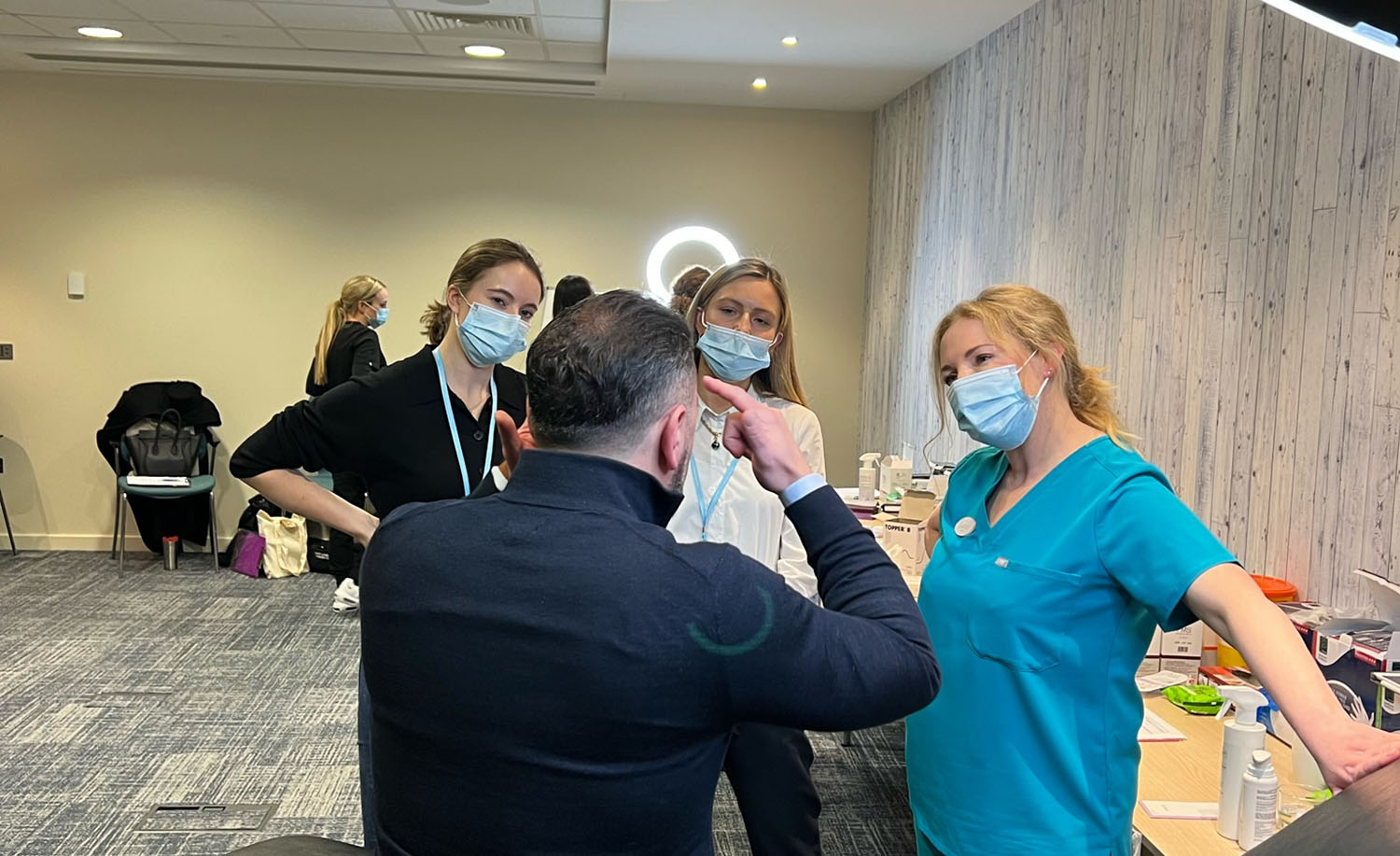
Demonstrations are useful, but injecting skills develop through assessing and treating patients yourself, with feedback from a trainer. Ask how many patients you will personally assess and treat, in which areas, and how much of the practical day this takes up. Check whether you will train on live model patients or on mannequins.
3. What is the ratio in the treatment room?
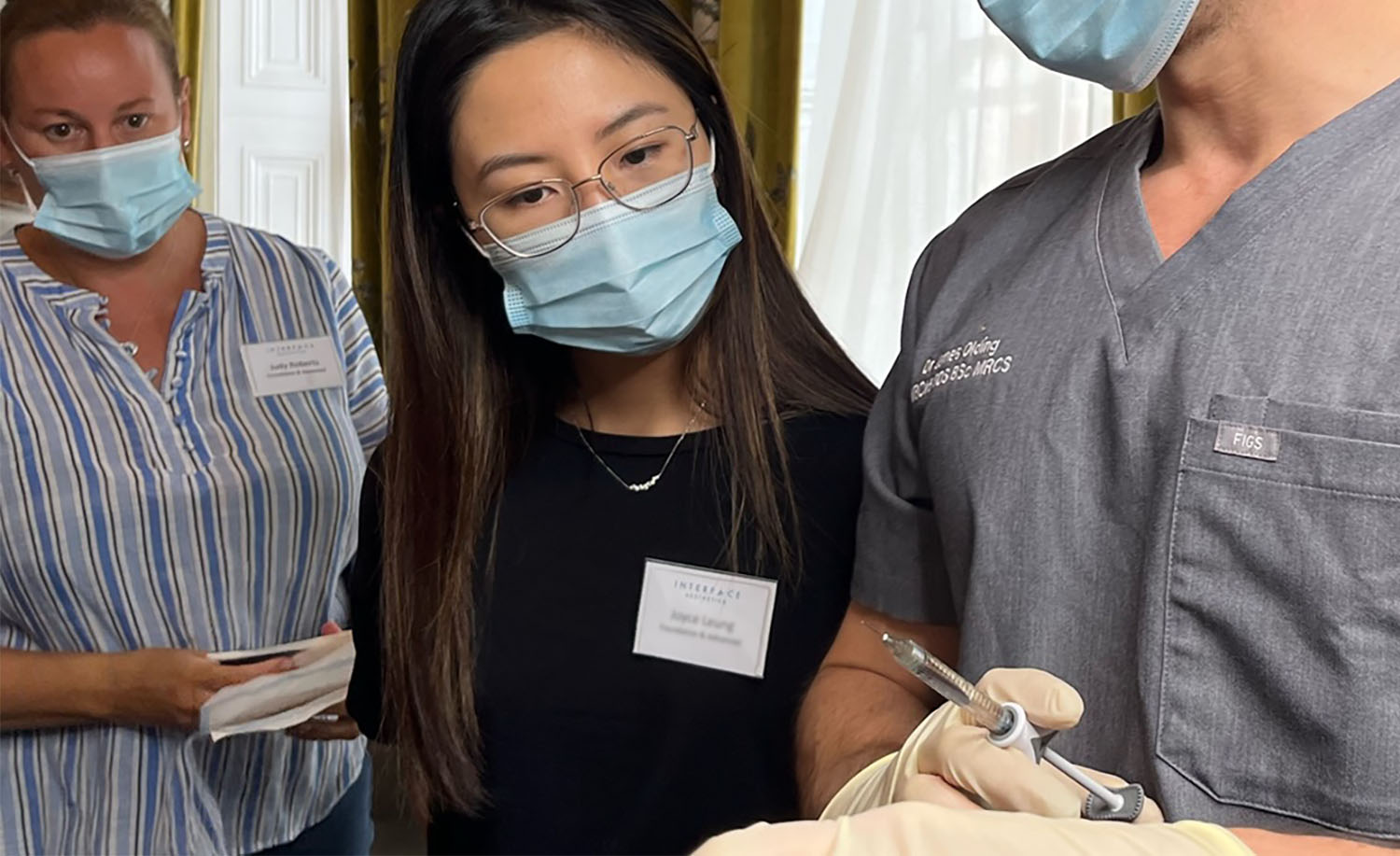
Group size tells you less than the number of delegates each trainer supervises while you inject. Ask for that ratio, and whether it changes on busier dates or at other venues.
4. How are model patients recruited and cared for?
Model patients are patients first. Ask how they are recruited and screened for suitability, who takes consent, who provides aftercare and follow-up, and how a complication would be managed after the training day.
5. What happens before the practical day?
Pre-course learning lets you spend more of the practical day treating patients. Ask how many hours it involves, whether it covers facial anatomy, consultation, consent and complications, whether your understanding is checked, and whether you keep access afterwards.
6. How are complications taught?
Every injectable treatment carries risk, so teaching should cover prevention, early recognition and escalation, not only technique. Ask how the course addresses vascular compromise after dermal filler, which emergency medicines and equipment are kept at the training clinic, and whether you will rehearse an emergency response. Ask, too, what help is available if you have a complication in your own practice after the course.
7. What will your certificate show, and will your insurer accept it?
Ask what the certificate states: the treatments covered, the hours of learning and any continuing professional development (CPD) points. Before you book, ask your insurer or indemnity provider to confirm that the course meets its requirements for the treatments you plan to offer, rather than relying on the course page.
8. What comes next?
A first course starts your development rather than completing it. Ask what the next step would be (further supervised practice, mentorship, advanced courses or an assessed qualification), whether earlier courses count towards it, and what support you can access once the course has finished.
Check what support continues after the training day
Ask how you will keep learning when questions arise in practice. Can you revisit the online videos and theory? How long does access last, how are materials updated, and who can answer educational or clinical questions? Confirm what further mentorship or supervised practice is available, how you arrange it and whether it costs extra.
Educational support and urgent complication care serve different purposes. Ask about the hours, response arrangements and limits of each, including who takes clinical responsibility. Access to a learning platform or a faculty network should not be treated as a promise of emergency cover.

Look at the wider learning community
Webinars, case discussions, governance meetings, conferences and contact with fellow delegates can help you keep questioning and developing your practice. Ask which activities the academy currently offers, how you take part and which are included in your course fee.
At Interface Aesthetics, E-Interface supports online learning, while Interface Expo provides a setting for multidisciplinary discussion and professional networking. Our course pages also describe mentorship and faculty or colleague networking. Check the access and inclusions for your chosen pathway; an event, masterclass or additional mentoring session should only be treated as included when your package confirms it.

Compare Level 7 providers and packages
Alongside the qualification, compare how it is delivered: who teaches you, the supervision and practical experience offered, the accessibility of the team, learning resources and help with assessment. Ask for a clear breakdown of what you must complete for the regulated award and what the provider adds to the package.
Interface offers the Level 7 programme and packages combining it with specialist masterclasses. Additional courses can support particular interests, but they should be chosen around your experience and goals. Confirm the current course inclusions, fees and support arrangements with the team before booking. Extra package benefits do not change the requirements for the qualification itself.
Plan prescribing before you book
Botulinum toxin is a prescription-only medicine. Dermal fillers are regulated as medical devices, but some medicines used to manage filler complications, such as hyaluronidase, are prescription-only. Work out how prescribing will operate for your patients before you train.
Four regulators set out the same expectation: patients are assessed in person before these medicines are prescribed. The General Medical Council (GMC) says doctors must physically examine patients before prescribing injectable cosmetic medicines and must not prescribe them remotely. Since 1 June 2025, the Nursing and Midwifery Council (NMC) has required nurse and midwife prescribers to carry out a face-to-face consultation before prescribing for elective non-surgical cosmetic procedures. The General Pharmaceutical Council (GPhC) says pharmacist prescribers must prescribe these products only after a physical examination, and the General Dental Council (GDC) says dentists must not prescribe remotely for these procedures. If you are registered with the Health and Care Professions Council (HCPC), check its standards for prescribing and your scope of practice.
If you are not a prescriber, you will need a prescriber who assesses each of your patients in person before any prescription-only medicine is prescribed. A course certificate does not confer prescribing rights, so ask any provider how its teaching covers these arrangements. Nurses and midwives can read the Interface Aesthetics guidance for nurses and midwives, which explains how prescribing status shapes a training plan.
What accreditation labels tell you
Course pages often combine several labels. Each answers a different question.
- CPD accreditation can support your CPD record, but it is not a regulated qualification. Ask which organisation accredited the course and how many CPD points or hours it carries.
- An Ofqual-regulated qualification appears on Ofqual’s register with its exact title, level, awarding organisation and qualification number. Ofqual regulates qualifications, examinations and assessments in England. Several awarding organisations offer Level 7 qualifications in aesthetic injectables, so compare the exact title, assessment and teaching, not just the level.
- Level 7 describes difficulty, not the type or size of a qualification. The government’s list of qualification levels places Level 7 diplomas and certificates alongside master’s degrees and postgraduate diplomas, and qualifications at the same level can cover different amounts of a subject.
- JCCP approval comes from the Joint Council for Cosmetic Practitioners (JCCP), a registered charity that assesses education and training providers against its own standards, including the suitability of their premises, and publishes a list of approved providers. Approval is voluntary quality assurance, not a licence to practise. The JCCP states that it recognises VTCT qualifications only when they are studied at the centres it names, so check that the provider itself is listed.
Where regulation stands in October 2026
Training decisions should be based on the skills, judgement and evidence of competence you need for your practice. A qualification cannot promise eligibility for rules that have not yet been finalised.
In England, section 180 of the Health and Care Act 2022 provides a power to introduce licensing for specified non-surgical cosmetic procedures. The government’s 2025 response set out separate work on high-risk procedures and local authority licensing for lower-risk treatments.
On 21 October 2026, DHSC opened a consultation on restrictions for high-risk cosmetic and wellbeing procedures, including specified professional groups and CQC registration. These are proposals. The consultation closes on 13 January 2027, with final regulations still subject to the parliamentary process. It does not establish that a Level 7 Diploma guarantees future licensing eligibility.
Check current requirements in the UK nation where you intend to practise, alongside your regulator’s standards, prescribing arrangements and indemnity. Our recommendation for Level 7 rests on its structured learning, supervision and assessment.
How Interface Aesthetics answers these questions
At Interface Aesthetics, we train registered healthcare professionals and international equivalents, and we encourage you to put these questions to us too. Our published course information answers several of them:
- Teaching: our faculty includes surgeons, doctors, dentists and nurses, and trainer profiles are on our faculty page.
- Format: the Foundation Botox and Fillers Course combines 8 hours of pre-course e-learning with a day of in-person training in London or Manchester, where delegates work in groups of four and treat live model patients.
- Model patients: each model has a consultation to assess suitability and signs a consent form before treatment, and there are no more than four trainees and one trainer in the room.
- Complications: the Foundation syllabus includes complication avoidance, recognition and management, vascular occlusion and emergency medications.
- Prescribing: we do not provide independent prescribing qualifications. The Foundation syllabus includes pharmacy and prescribing among its practice set-up topics, and our team can talk through your position before you book.
- Certification: the Foundation course carries 8 CPD points and a certificate of completion.
- Progression: Foundation forms part of our Level 7 pathway. The standard programme develops learning through theory, supervised observation and treatment, mentorship, portfolio evidence and formal assessment. Observed cases and treatments you perform are recorded separately. The JCCP lists Interface Aesthetics as an approved provider for the VTCT diploma. Discuss the current requirements and any additional masterclasses with our team.
We recommend investing in structured teaching, supported practice and assessed progress. Explore our courses and training pathway, then discuss your registration, experience and goals with our team so we can help you choose an appropriate Level 7 route and package. If you are not ready to commit to the full programme, ask how Foundation can provide an introduction and fit into later progression.
Frequently asked questions
What do the latest licensing proposals mean for choosing training?
The government is developing regulation in England, including the high-risk procedures consultation opened on 21 October 2026. A course cannot guarantee that it will satisfy future rules. Choose a pathway for its current teaching, supervised practice and assessment, and keep up to date with requirements for your profession and the procedures you intend to offer.
Does JCCP approval mean a course is regulated?
No. JCCP approval is voluntary quality assurance of a provider against the JCCP’s own standards. A regulated qualification is one listed on Ofqual’s register, and neither is a licence to practise.
Is a CPD-accredited course the same as a regulated qualification?
No. CPD accreditation can support your CPD record, whereas a regulated qualification is listed on Ofqual’s register with an awarding organisation and qualification number.