
Education
What makes an expert in aesthetic medicine?

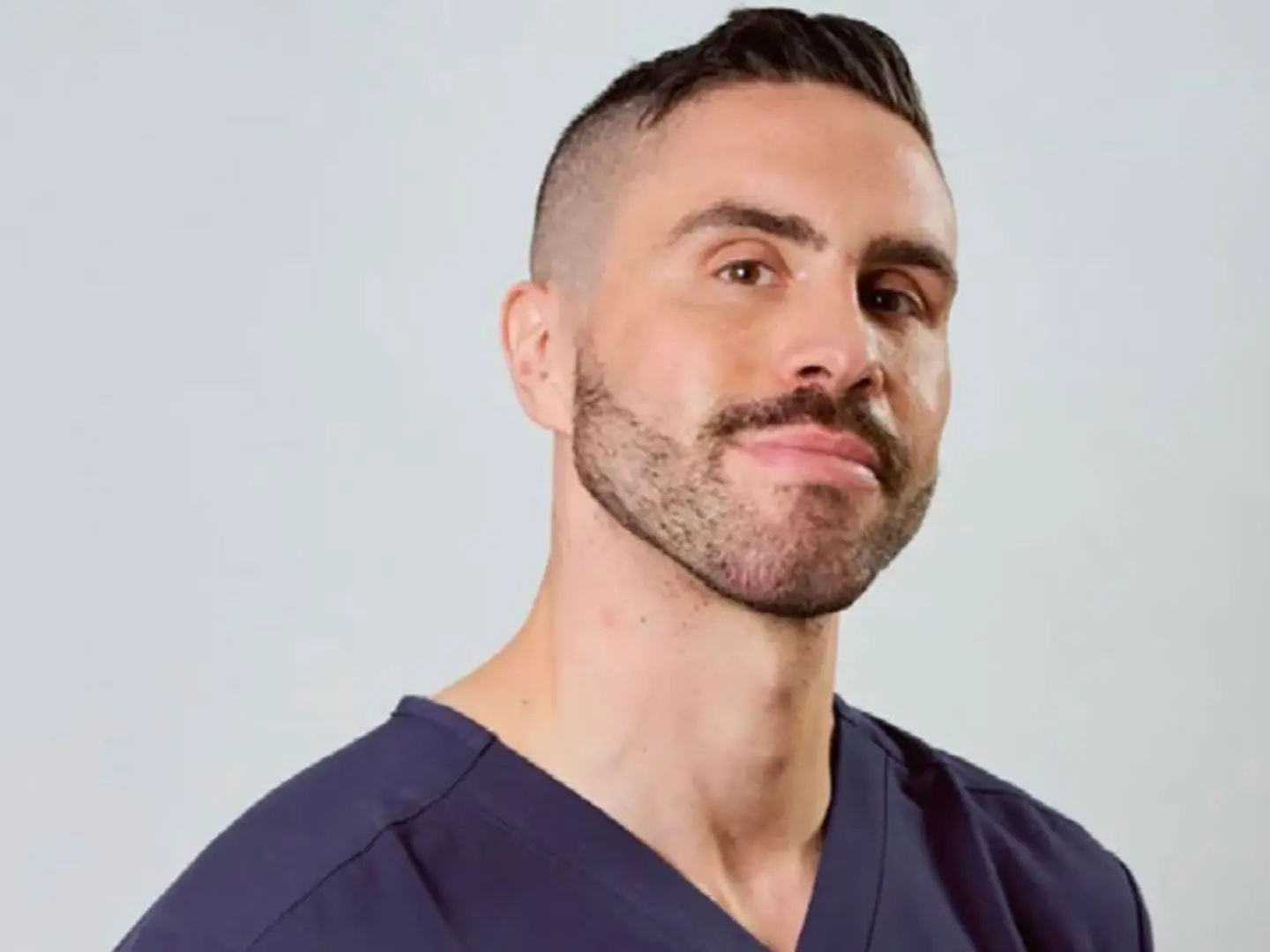
By Mr James Olding, MBChB (Hons), BDS (Hons), FRCS (OMFS) · Founding Clinical Director, Interface Aesthetics
A qualification tells you that, on a given day, against a defined standard, a practitioner was assessed as competent. It does not tell you how they will practise in five years, how they will handle the case that goes wrong, or whether their judgement is still developing. That is the difference between competence and expertise. In aesthetic medicine, we have spent a great deal of effort on the first and very little on the second.
This article explains how I think about expertise, the evidence behind that thinking, and the framework we have built at Interface Aesthetics to support practitioners after they qualify.
What twenty years of training taught me
I have spent twenty years in training: medicine at Bristol, then dentistry at King’s, membership and subsequently fellowship of the Royal College of Surgeons in Oral and Maxillofacial Surgery. I am now in the final stage of specialist training as a facial surgeon in the NHS.
What those years gave me was not, in the end, only technical. Technique can be taught with support and practice. What specialist training gave me was a system:
- supervisors who knew my work;
- a logbook that made my practice visible;
- morbidity and mortality meetings where difficult cases were discussed openly and without blame;
- mandatory audit and research opportunities;
- an annual review of my competence against a defined standard;
- and, on every single occasion, someone more senior to call when something went wrong.
In twenty years of medical and surgical practice I have managed many challenging cases. I have never had to face one truly alone. Even as a consultant surgeon, I will not be truly alone with a difficult case.
The gap after qualification
I founded Interface Aesthetics in 2019, and I saw what happens to excellent practitioners after they qualify.
They complete a rigorous Level 7 diploma. They are assessed, they are competent — and then they return to a room where they work entirely by themselves. Nobody reviews outcomes. Nobody discusses the difficult cases. Nobody helps them develop the judgement that separates a skilful injector from a safe, expert one.
The gap is not knowledge, nor is it skill. The gap is that we ask healthcare professionals to perform invasive medicine without the scaffolding that every other branch of healthcare takes for granted. Developing outstanding judgement requires two things: a framework, and a body of professionals who can lend their own judgement and expertise to support decisions and growth.
What the evidence says about expertise
Expertise is not a vague idea. It has been studied for decades, and three bodies of work underpin the way we approach it.
Dreyfus and Dreyfus described skill acquisition as a progression through five stages: novice, advanced beginner, competent, proficient and expert. Novices rely on rules. As experience grows, practitioners begin to see situations as a whole and, eventually, act fluidly on deep, pattern-based understanding.
Patricia Benner applied the Dreyfus model to clinical nursing practice in From Novice to Expert. She showed how clinical judgement develops through experience of real cases, and why expertise cannot simply be taught in a classroom.
Olle ten Cate introduced entrustable professional activities: units of clinical work that a supervisor can entrust to a trainee once they have shown they are ready. Entrustment is graded by the level of supervision a practitioner needs, from not yet practising through to supervising others.
At Interface Aesthetics, we bring these models together into a five-level framework:
| Level | Stage of skill (Dreyfus and Benner) | Entrustment (ten Cate) |
|---|---|---|
| 1 | Novice | Not permitted to practise |
| 2 | Advanced beginner | Practises with direct supervision |
| 3 | Competent | Practises with indirect supervision |
| 4 | Proficient | Practises autonomously |
| 5 | Expert | Can supervise others |
The framework matters because it makes progression visible. A practitioner can be at level 4 for one treatment and level 2 for another. Most scope-of-practice problems begin when someone assumes that competence in one area transfers automatically to the next.
Self-assessment needs calibration
Every practitioner should reflect on their own practice. But self-assessment alone is of limited value without calibration: someone else’s view of your work, data to compare yourself against, and peers who will challenge your reasoning.
Specialist training solves this with structure. A surgical trainee does not become a specialist by attending courses. They enter training against defined prerequisites, attend a regular teaching programme, keep a mandatory logbook, reflect on cases and significant events, attend morbidity and mortality meetings, complete and present audit or quality improvement work, declare their scope, and appear before an annual panel that reviews the evidence. Progression depends on engagement, and the trainee generates the evidence.
That model has been refined over decades, and it works. Until recently, I had not seen it built for aesthetic medicine.
Building that architecture for aesthetics
Interface Expert is our structured mentorship and clinical governance pathway for registered healthcare professionals who already hold a Level 7 qualification. It is modelled directly on specialist training:
| NHS specialist training | Interface Expert |
|---|---|
| Primary qualification (for example medicine, dentistry, nursing) | Level 7 Diploma in Injectables |
| Regional teaching programme | Monthly mentorship session with expert faculty |
| Mandatory logbook and portfolio | Monthly data submission |
| Significant event reporting and reflection | Complications pathway with structured reflection |
| Morbidity, mortality and clinical governance meetings | Quarterly multidisciplinary governance meetings |
| Mandatory audit or quality improvement, presented | Member quality improvement projects presented at governance meetings |
| Educational and clinical supervision | Expert faculty mentorship |
| Annual review of competence | Annual self-assessment, scope declaration, portfolio and certificate |
It rests on three pillars.
CPD. A monthly session with our faculty, built around complications, techniques and treatment planning, with case discussion drawn from real practice. Each session carries verifiable CPD mapped to the requirements of the GMC, GDC and NMC.
Complications. A complication is the moment a practitioner feels most alone, and the moment mentorship matters most. Members first complete core emergency modules, then can bring difficult cases to a multidisciplinary faculty and close each one with their own reflection. The result is a documented chain — event, advice, resolution, learning — that becomes significant event evidence.
Clinical governance. Quarterly multidisciplinary meetings for case discussion, review of submitted audit data and members’ quality improvement projects. A governance meeting is only genuine when more than one discipline is in the room. That is why the faculty includes plastic surgery, maxillofacial surgery, dermatology and psychology alongside our injectables educators.
Membership carries obligations in both directions. Members submit data, report and reflect on complications, and repeat a self-assessment at the start and end of each year. Interface Aesthetics provides the mentorship, the review, the governance meetings and benchmarked feedback. Repeating the self-assessment at both ends of the cycle turns a year of activity into a measurable pathway.


What you can do now, wherever you trained
Expertise is built deliberately. Whatever stage you are at, you can start:
- Map your scope. List the treatments you perform and, honestly, the level of supervision you would need for each.
- Keep a logbook. Record cases, outcomes and complications in a consistent format.
- Reflect on every significant event, including near misses.
- Seek calibration. Find peers and senior colleagues who will review your work and challenge your reasoning.
- Audit something. Choose one aspect of your practice and measure it against a standard.
Competence gets you through the door. Expertise is what you build afterwards, with the right structure and the right people around you.
If you hold a Level 7 qualification and would like to know more about Interface Expert, contact our team. If you are earlier in your journey, start with the Level 7 Diploma in Injectables.
References
- Dreyfus SE, Dreyfus HL. A Five-Stage Model of the Mental Activities Involved in Directed Skill Acquisition. Berkeley: University of California, Operations Research Center; 1980.
- Benner P. From Novice to Expert: Excellence and Power in Clinical Nursing Practice. Menlo Park, CA: Addison-Wesley; 1984.
- ten Cate O. Entrustability of professional activities and competency-based training. Medical Education. 2005;39(12):1176–1177.