Education
Foundation Botox and dermal filler training: what to expect and how to prepare
At Interface Aesthetics, our Foundation Botox and Fillers Course is a one-day, hands-on introduction to aesthetic medicine for healthcare professionals. It’s the first step of our Level 7 Diploma in Injectables, the route we recommend if you want full, structured training. You can also take Foundation on its own if you’re not ready to commit to Level 7 yet, or you’d like a taste of aesthetics before you decide. This guide explains how the course works, what you’ll learn and how to prepare.
Who the Foundation course is for
Foundation is for registered healthcare professionals who want to start in aesthetics, or to get a taste of it first. It’s a beginner course, so you don’t need any injecting experience.
We train doctors, dentists, nurses and midwives and pharmacists, whether or not you’re a prescriber. We also train some allied health professionals, such as paramedics, after reviewing each person individually. If that’s you, please contact us before you book.
If you’re registered outside the UK, you’ll need an active registration and licence to practise in your own country (see our guidance for international practitioners). A UK course doesn’t give you permission to practise in the UK. Check the UK entry requirements before you book, too. We can’t sponsor Student visas. Some practitioners may be able to attend a short course as a visitor instead, but this depends on your nationality and circumstances, and it’s your responsibility to check the current rules on GOV.UK.
How the course works
The course has two parts.
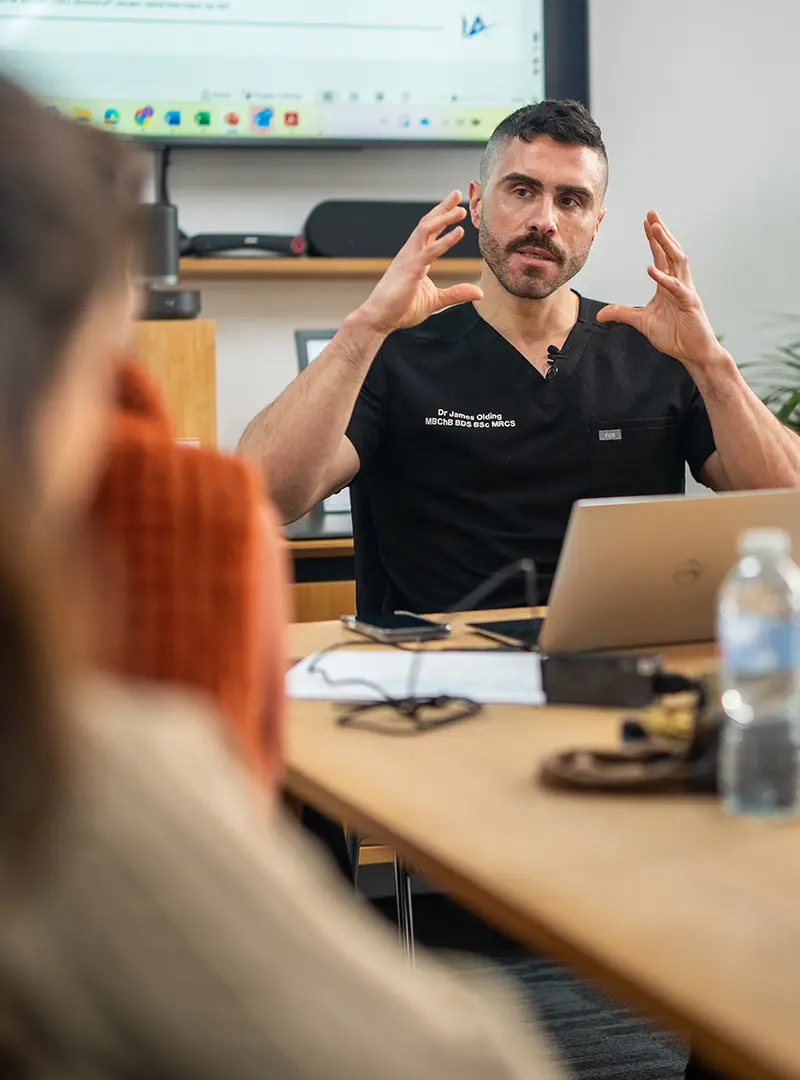
- Before the day: eight hours of e-learning. You work through lectures and clinical case demonstrations on E-Interface, our e-learning platform. They cover the theory the practical day builds on, including facial anatomy, consultation, assessment and complications. You keep lifelong access afterwards.
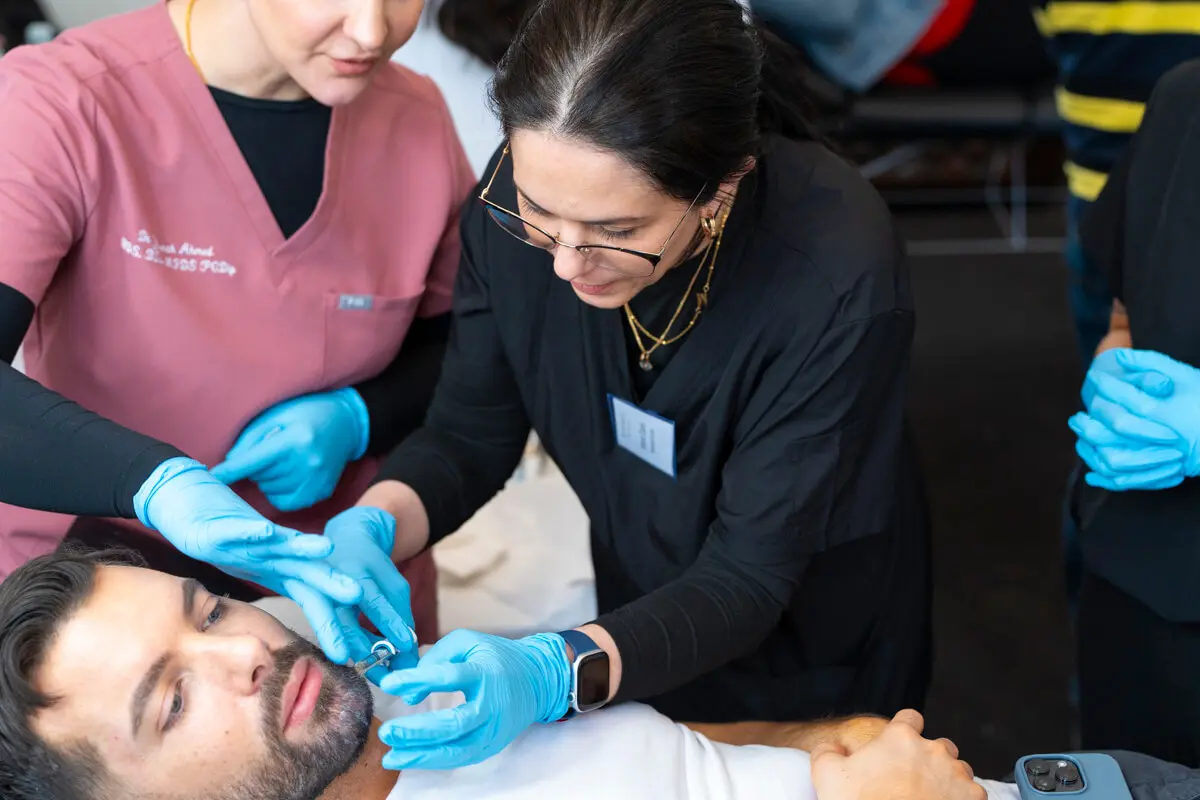
- The practical day, 9am to 5pm. You train at one of our clinical training centres in London or Manchester, in a small group of four, with clinicians from our faculty.
On the day, you’ll learn botulinum toxin treatment for the upper face (forehead lines, frown lines and crow’s feet) and be introduced to dermal fillers for the cheeks, lips, and nasolabial and marionette lines.
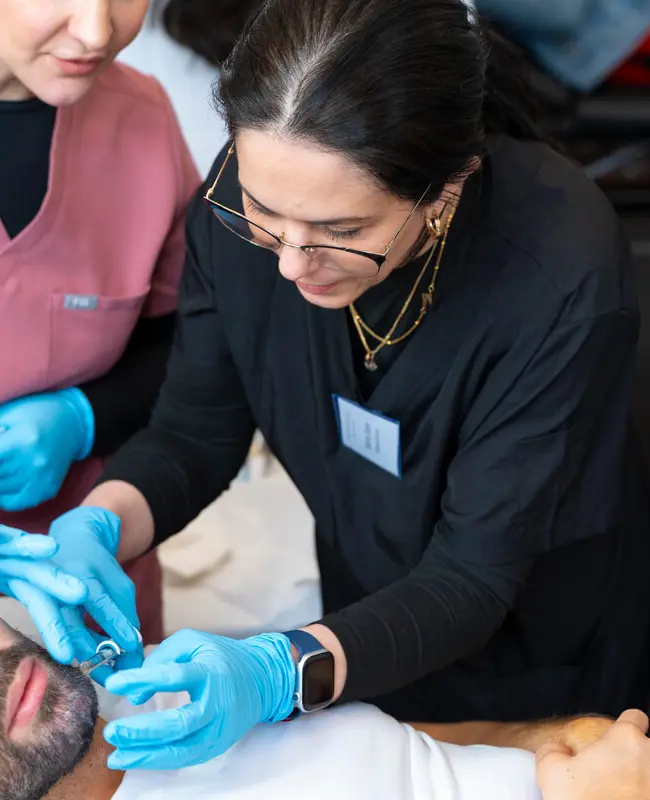
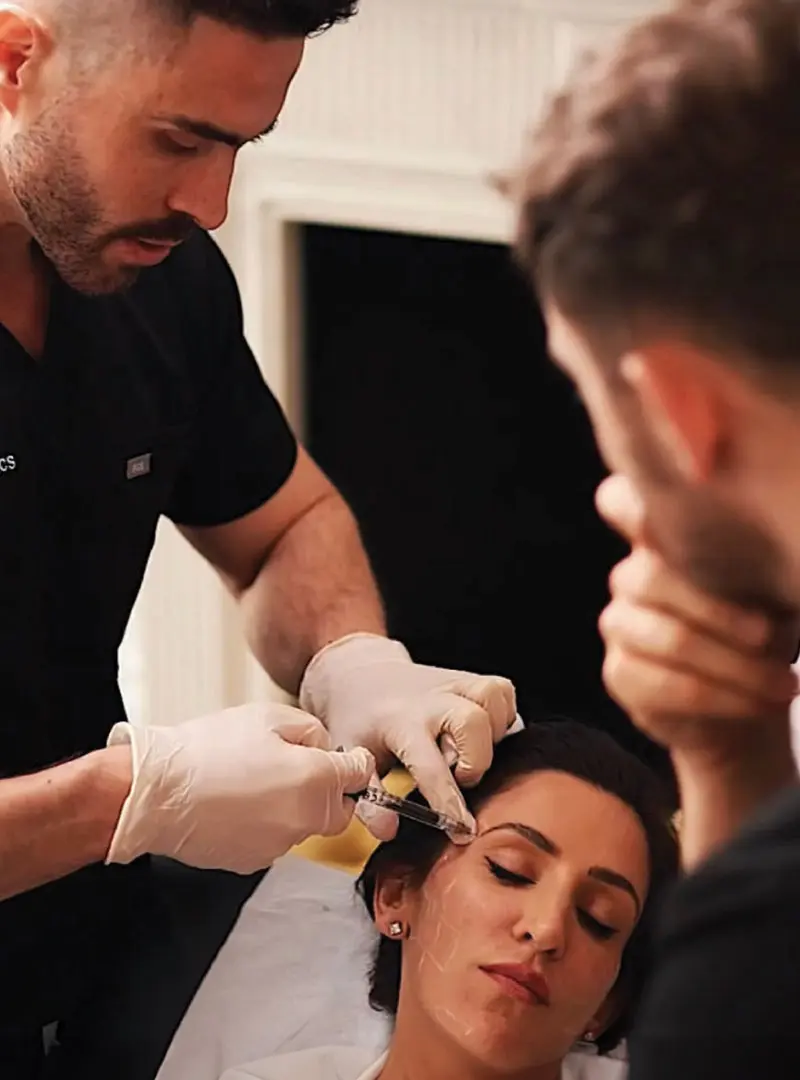
You treat model patients under a trainer’s direct supervision. We recruit these patients separately and check they’re suitable for treatment. Each one is seen as they would be in clinic: consultation and assessment, time for questions and written consent, then treatment and aftercare advice.

Your certificate
There’s no assessment on the Foundation course. Once you’ve attended the face-to-face day, you’ll receive a certificate of completion and 8 CPD points. You can use your certificate to register with aesthetic pharmacies and to arrange your indemnity insurance.
If you go on to the Level 7 Diploma, that’s where formal assessment comes in: coursework, a 40-patient portfolio built under supervision, a written exam and a filmed practical exam.
If you’re not a prescriber
You don’t need to be a prescriber to train with us. But botulinum toxin is a prescription-only medicine (POM). Before it’s prescribed for cosmetic use, healthcare professionals are expected to follow a thorough process of assessing each patient through a face-to-face consultation.
So if you’re not a prescriber, you’ll need to work alongside one for any treatment involving botulinum toxin. Some prescribers are happy to work with non-prescribers, and may charge a fee for this. Or you can work in an established clinic, where a prescriber is responsible for the prescriptions. Check your own regulator’s rules, so you know you’re following the right ones.
Our team can help you find a prescriber. Remember, too, that neither Foundation nor the Level 7 Diploma is a prescribing qualification: independent prescribing is a separate qualification, taken through a university.
What one day can and can’t do
We make the day as hands-on as we can. Even so, there’s a lot to take in, and one day won’t make you confident in every clinical situation. Foundation is a strong start, not the end of your training. We see delegates come back after Foundation to continue onto Level 7, once they’ve seen the value of further training and mentorship.
If you want a broader, comprehensive and regulated qualification that helps future-proof your aesthetics career, we recommend the Level 7 Diploma in Injectables. It adds ongoing clinical mentorship, more supervised practice, a 40-patient portfolio and formal assessment, so you have the time and feedback to build your skills and judgement. Foundation is the first step of Level 7, so ask our team how your Foundation course counts towards it.
You can also build on Foundation with focused courses, such as the Advanced Toxin & Cannula Skills Course (you’ll need your Foundation certificate to book) and our online Aesthetics Complications Management Course. After the course, you keep lifelong access to the Foundation e-learning and to our network of trainers and colleagues.

How to prepare yourself for the face-to-face Foundation course
- Check you’re eligible. Have your registration details to hand. If you’re an allied health professional, such as a paramedic, contact us before you book.
- Know your prescribing position. If you’re not a prescriber, start thinking about how you’ll work with one after the course. Our team can help: we’re connected with organisations that hold databases of prescribers.
- Plan your indemnity insurance for after the course. You don’t need insurance to attend the course, but you will before you treat patients on your own. Your certificate helps you arrange it.
- Complete the e-learning. Finish all eight hours before the day, and note any questions for your trainer.
- Revisit facial anatomy. Focus on the upper-face muscles and where the key blood vessels and nerves run.
- Bring your questions. On the day, ask why a patient is or isn’t suitable, how the treatment plan was reached and what you’d do if a complication happened.
- Plan what comes next. Line up your first patients and think about further training. Foundation on its own won’t give you every skill you need to start, so you may need more courses. That’s why we recommend the Level 7 Diploma.
- Confirm the practical details. Check the venue and how you’ll get there for the 9am start. If you’re travelling from outside the UK, check the entry requirements early.
Frequently asked questions
Do I need experience with injectables?
No. It’s a beginner course. You need to be a registered healthcare professional, but you don’t need any experience with botulinum toxin or dermal fillers.
What will I learn on the day?
Botulinum toxin for the upper face, and an introduction to dermal fillers. You’ll learn facial anatomy, consultation, injection techniques, how to reconstitute botulinum toxin and work out the units, and how to avoid and manage complications. Then you put it into practice with model patients, under supervision.
Can I treat patients on my own after the course?
Yes, once you have indemnity insurance, a prescriber where you need one, and you’re working within your competence and your regulator’s requirements. One day is a starting point, though, so we recommend further supervised practice, ideally through Level 7.
Should I train in botulinum toxin or fillers first?
You don’t have to choose, because Foundation introduces both. After the course, what you practise first depends on your prescribing set-up (botulinum toxin needs a prescriber), the treatments you plan to offer and where you can get supervised experience.
Take the first step
Foundation is a practical, hands-on introduction to aesthetic medicine. It’s also the first step of the Level 7 Diploma, which builds on that first day with further training, mentorship and assessment. Not sure where to start? Speak to our team about your registration, experience and goals.