Education
Who is eligible for the Level 7 Diploma in aesthetics, and which route suits you?
At Interface Aesthetics, we train registered healthcare professionals, including eligible international equivalents. These are our academy’s admissions requirements, not a universal policy for every Level 7 provider. Your registration, qualifications and clinical background need to meet the requirements of your chosen route. The standard Level 7 programme is open to eligible beginners and experienced practitioners who want the full training and mentorship pathway. Recognition of prior experiential learning (RPEL), also called recognition of prior learning (RPL), is a different route for practitioners who can evidence relevant competence from their existing practice.
Interface’s entry requirements at a glance
- Professional registration: you must be a registered healthcare professional, including an eligible international equivalent. We check your particular registration, professional scope and any restrictions before confirming admission.
- Qualifications and language: be ready to provide identification, your qualifications and registration evidence. We also check the academic and English-language requirements for the award; contact us about the evidence needed for your circumstances.
- Experience: no previous injecting experience is required for the standard programme. Experienced practitioners may also choose its full teaching and mentorship. RPEL requires evidence of relevant existing practice and an assessment of eligibility.
- Prescribing: you do not need independent prescribing status to enquire about training. We discuss how your prescribing position affects your training and subsequent practice; neither route is an independent prescribing qualification.
Professional registration alone does not guarantee a place on every route. We publish guidance for doctors, dentists, nurses and midwives, pharmacists, paramedics and other allied health professionals; the profession sections below explain when an individual course-suitability discussion is needed.
What the regulated qualification means
The standard programme leads to the VTCT Skills (ITEC) Level 7 Diploma in Clinical Aesthetic Injectable Treatments, qualification number 603/5968/7. VTCT’s qualification information sets out the award and assessment components, and the JCCP lists Interface Aesthetics as an approved provider.
Ofqual regulates qualifications and recognised awarding organisations in England. VTCT Skills awards the qualification, sets its assessment requirements and oversees quality assurance at approved centres. Interface provides your teaching and support. In practical terms, you work towards defined learning outcomes and demonstrate attainment through assessment, with external quality assurance. That gives the diploma a different purpose from a certificate confirming attendance at a short course.
Eligibility by profession
Doctors
GMC-registered doctors meet the registration requirement whatever their specialty or career stage, including GPs, hospital doctors and specialists. Doctors registered outside the UK need an active registration and licence to practise in their own country. Our guidance for doctors sets out the training pathway.
Dentists
GDC-registered dentists are eligible at any stage of their career. Before you move into independent aesthetic practice, confirm your position with your indemnity provider. Our guidance for dentists covers the dental route into aesthetics.
Nurses and midwives
NMC-registered nurses and midwives meet the registration requirement. For midwives, we confirm course suitability against your clinical background and professional scope before you book. You don’t need to be an independent prescriber to start: see the prescribing section below and our guidance for nurses and midwives.
Pharmacists, paramedics and other allied health professionals
We publish separate guidance for pharmacists, paramedics and other allied health professionals, including routes for practitioners who don’t prescribe. Level 7 eligibility depends on your registration and professional scope, so confirm your route with our team before you apply.
Do you need to be a prescriber?
Not to apply. Prescribing status isn’t one of our Level 7 entry requirements, and you don’t need an independent prescribing qualification to begin training. We don’t teach independent prescribing; it’s obtained separately through a university programme.
Prescribing matters most after training. Botulinum toxin is a prescription-only medicine, which the Medicines and Healthcare products Regulatory Agency (MHRA) says should only be supplied against a prescription from an appropriate prescriber. The professional regulators also expect prescribers to see the person before prescribing. For example:
- The GMC says doctors must carry out a physical examination before prescribing non-surgical cosmetic medicines, and must not prescribe them remotely.
- Since 1 June 2025, the NMC has required independent nurse and midwife prescribers to consult face to face before prescribing for elective non-surgical cosmetic procedures.
- The General Pharmaceutical Council (GPhC) says pharmacist prescribers must prescribe non-surgical cosmetic products only after a physical examination of the person, so remote consultations aren’t appropriate.
If you don’t prescribe, plan how you’ll work with a prescriber who assesses each patient in person. Check your own regulator’s guidance and your indemnity cover before you treat patients independently.
Standard programme or RPEL: which route fits your experience?
The standard programme: teaching, mentorship and assessed development
The standard Level 7 is suitable for eligible healthcare professionals with no previous injecting experience. Experienced practitioners can also choose it to consolidate their knowledge, develop their skills and benefit from structured teaching and clinical mentorship. Years in practice do not automatically make RPEL the better choice.
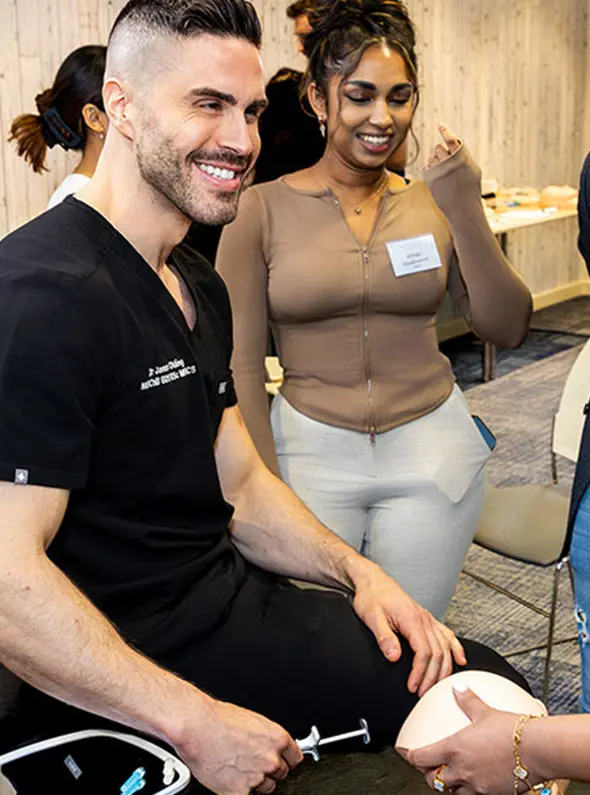
The programme combines theory with practical teaching, supervised observation and treatment, individual feedback, portfolio development and preparation for assessment. Mentorship helps you work through patient assessment and treatment planning, explain your clinical decisions and recognise complications, alongside developing injection technique.
Your portfolio records different types of experience. A case you observe is recorded as observation; a treatment you personally perform is recorded separately. The team will explain the current case requirements and how your supervised experience contributes to the evidence for assessment.
RPEL: assessment of existing learning and clinical experience
RPEL is for experienced practitioners who meet the evidence requirements and want their existing competence recognised towards the qualification. You submit evidence from your own practice and complete the assessments required for your approved route.
You do not attend face-to-face teaching or clinical mentoring sessions to build a new portfolio with us on this route. Assessment attendance is separate from taught or mentored training. Your experience, case evidence and any assessment exemptions must be reviewed before we confirm the route and what you need to complete.
RPEL may support continuing professional development and longer-term career plans. It is not an introductory route for beginners and does not guarantee compliance with future regulations.
| What to compare | Standard programme | RPEL fast track |
|---|---|---|
| Who it suits | No previous injecting experience required; also open to experienced practitioners seeking the full training and mentorship pathway. | Experienced practitioners whose existing learning and clinical evidence meet the approved route’s requirements. |
| Face-to-face teaching | Practical teaching forms part of the programme. | No face-to-face teaching to build a new portfolio; required assessments may involve attendance. |
| Clinical mentorship | Supervised observation and treatment, individual feedback and support with clinical judgement. | No clinical mentoring sessions to create a new portfolio with us. |
| Portfolio evidence | Developed during the programme, with observed cases distinguished from treatments personally performed. | Evidence submitted from the practitioner’s existing clinical practice. |
| Assessment | Required coursework and theory/practical assessment, supported by portfolio evidence. | Assessment requirements and any exemptions confirmed after review of the evidence for the approved route. |
Before choosing a route, review our RPEL information and discuss your experience and evidence with the team. Ask us to confirm the current experience thresholds, case numbers and assessment requirements that apply to you.
Applying from outside the UK
If you are registered outside the UK, ask us to confirm that your qualifications and registration meet the requirements for your chosen route before making travel or course bookings. We consider eligible international healthcare professionals and verify their credentials, including professional qualifications and current registration or licence. Our guidance for international practitioners explains the application process; paramedics and other allied health professionals require an individual suitability review.
Training is delivered in English. The awarding organisation sets English-language entry requirements, so confirm which evidence you need to provide as well as your ability to participate safely. Theory can be studied online, with practical attendance arranged for the standard programme in London or Manchester.
Two further points. Once the Level 7 course is fully paid, we can provide a factual letter confirming your booking and attendance, but we can’t offer visa sponsorship or other immigration support. And recognition of the qualification in your own country depends on local rules, so check them before you book. Training in the UK is also separate from any permission to practise here. Our answers for international applicants cover venues and planning your stay.
What to have ready before you apply
- Your professional registration details, or your overseas registration and licence.
- A clear summary of your injecting experience: years in practice and numbers of botulinum toxin and dermal filler treatments.
- For RPEL, the case evidence you could provide.
- Your prescribing position and, if you don’t prescribe, how you’ll work with a prescriber.
- What you want from the qualification: a structured route from the start, or formal assessment of experience you already have.
Frequently asked questions
Does Level 7 guarantee permission to practise or meet future licensing rules?
No qualification replaces your professional responsibilities, prescribing arrangements or indemnity requirements. We recommend the standard Level 7 for its structured learning, mentorship and assessment.
On 21 October 2026, the government opened an England consultation on restricting high-risk cosmetic and wellbeing procedures. The proposals and final regulations remain subject to the consultation and parliamentary process. Completing Level 7 cannot guarantee eligibility under future rules. Check the current requirements wherever you intend to practise.
Can I apply with no injecting experience?
Yes, if you meet the admissions requirements. The standard programme welcomes beginners and also experienced practitioners seeking the full teaching and mentorship pathway. Practical training starts with Foundation, then develops through further supervised experience and assessment.
How long do I have to complete it?
Up to three years for the full programme, so you can study alongside clinical work. The RPEL route is typically completed over a shorter timeframe.
Can I spread the cost?
Our finance options cover the Level 7, not our short courses. Being eligible for the course doesn’t automatically mean you’re eligible for finance: the listed requirements include UK residency and a UK bank or credit card account, and international applicants are considered case by case.
Your next step
Explore the Level 7 Diploma in Injectables and discuss your registration, experience and learning goals with our team. We can help you compare the full teaching and mentorship pathway with recognition of existing experience, and confirm the admission and assessment requirements before you choose.